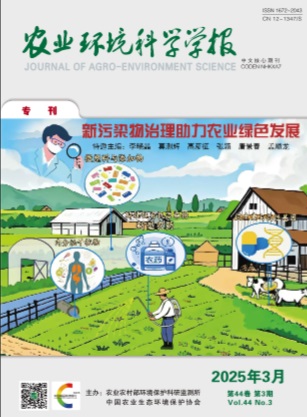
| 刘东阳,陈宝雄,马凤飞,宋易真,赵欣,朱联东,薛颖昊.“双碳”背景下气候智慧型农业研究进展与展望[J].农业环境科学学报,2025,44(11):2875-2886. |
| “双碳”背景下气候智慧型农业研究进展与展望 |
| Research progress and prospects of climate-smart agriculture under the background of "carbon peaking and carbon neutrality" |
| 投稿时间:2025-01-10 |
| DOI:10.11654/jaes.2025-0032 |
| 中文关键词: 气候智慧型农业 双碳 农业减排 文献计量学 潜在挑战 |
| 英文关键词: climate-smart agriculture carbon peaking and carbon neutrality agricultural emission reduction bibliometrics potential challenges |
| 基金项目:农业农村部农业生态环境保护专项(2110402);全球环境基金七期面向可持续发展的中国农业生态系统创新性转型项目(GCP/CPR/065/GFF) |
|
| 摘要点击次数: 1310 |
| 全文下载次数: 836 |
| 中文摘要: |
| 本文通过Web of Science数据库检索并借助VOSviewer可视化分析工具,对与碳排放和农业相关的文献进行系统计量与分析。结果表明,全球对相关研究的发文量从2010年的142篇显著提升至2024年的910篇。中国与西方发达国家为该领域的引领者,其他发展中国家在此方面的研究产出则相对较低。本文进一步剖析了气候智慧型农业的创新与应用技术,涵盖再生农业模式、智能化技术、生物技术、政策驱动与市场化机制及社会参与等多个维度,深入探讨了这些技术在促进农业低碳转型、提高资源利用效率及增强农业系统韧性方面的可行性。本文深入分析了气候智慧型农业发展面临的多重挑战,包括由生产方式难以转变、气候变化复杂性和不确定性对粮食产量造成的不可预测性以及社会经济因素等。最后,对未来气候智慧型农业发展进行了技术创新、法规与市场机制完善以及加强人才培养与公众参与等方面的展望,旨在推动我国农业向更加绿色、低碳、高效的现代化转型,为全球农业可持续发展贡献中国智慧与力量。 |
| 英文摘要: |
| Through retrieving from Web of Science database and with the help of the VOSviewer visual analysis tool, a systematic bibliometric analysis was conducted on the literature in the fields of carbon emission and agriculture. Results showed that research articles had been increasing, and the number of relevant research publications had significantly increased from 142 in 2010 to 910 in 2024. China and Western developed countries were the leaders in this field, while the research output of other developing countries in this regard was relatively low. This paper further reviewed the innovations and application technologies of climate-smart agriculture, covering multiple dimensions such as regenerative agricultural models, intelligent technologies, biotechnology, policy-driven and market-oriented mechanisms, and social participation, and studied the feasibility of these technologies in promoting the low-carbon transformation of agriculture, improving resource utilization efficiency, and enhancing the resilience of the agricultural system. The study deeply analyzed the multiple challenges faced by the development of climate-smart agriculture, such as the difficulty in transforming production methods, the complexity and uncertainty of climate change and its unpredictable impact on food production, as well as socio-economic factors. Finally, prospects were made for the future development of climate-smart agriculture in terms of technological innovation, improvement of laws and regulations and market mechanisms, and enhancement of talent cultivation and public participation. The aim was to promote the modernization transformation of China's agriculture towards a greener, lower-carbon and more efficient, while contributing Chinese wisdom and solutions to the sustainable development of global agriculture. |
| HTML
查看全文
查看/发表评论 下载PDF阅读器 |
|
|
|