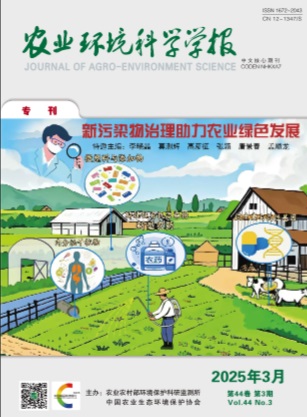
| This study aims to develop a field-deployable surface-enhanced Raman spectroscopy–convolutional neural network (SERS–CNN) integrated platform for the rapid and accurate identification of multi-component pesticide mixture residues in different fruit matrices, and to evaluate its reliability and generalization capability in real agricultural scenarios through explainable algorithms and orchard-based field validation.Reproducible AuNP-based SERS substrates were prepared using a citrate reduction method, and Raman spectra of single-component and multi-component pesticide mixtures were collected from various fruit matrices, including apples, peaches, pears, and grapes. A convolutional neural network was subsequently designed and trained to enable rapid identification of complex pesticide mixture residues from the acquired SERS spectra. Model interpretability was investigated using Gradient-weighted Class Activation Mapping (Grad-CAM), and field validation experiments were conducted in orchards to assess the practical performance of the proposed system.A comprehensive multi-pesticide mixture residue database comprising 5,979 SERS spectra across multiple fruit matrices (apple, peach, pear, and grape) was established. By leveraging the automatic feature extraction and classification capabilities of convolutional neural networks, a CNN–SERS-based on-site rapid screening method was developed for multi-matrix pesticide residue analysis. The proposed method achieved identification accuracies of 96.86% and 96.59% for standard samples and real fruit extracts, respectively, outperforming conventional algorithms such as LSTM, support vector machine (SVM), and random forest. Furthermore, Grad-CAM visualization and orchard-based field experiments validated the model’s interpretability, cross-matrix generalization ability, and practical application potential. The proposed CNN–SERS integrated platform enables rapid, accurate, and field-deployable screening of multi-pesticide mixture residues in complex fruit matrices, providing an efficient and scalable technical approach for practical orchard monitoring and food safety supervision. |